

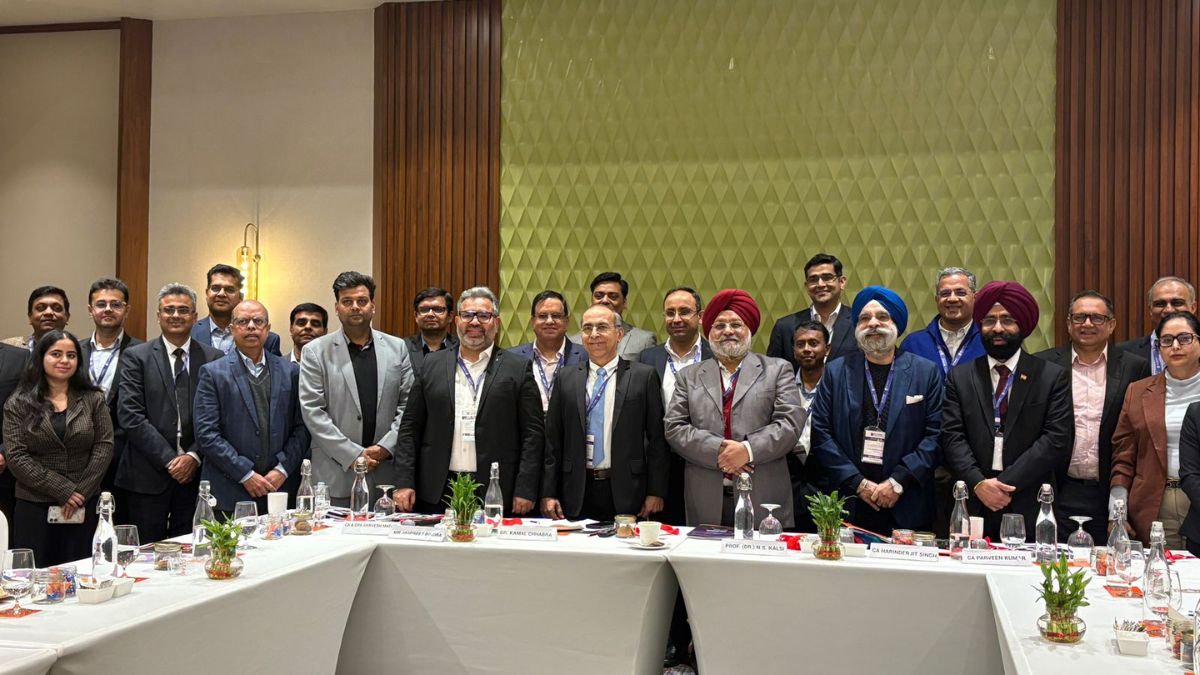
New Delhi [India], January 29: GCC School and KC GlobEd successfully organised a dynamic Round Table meeting on the theme “Impact of AI on GCCs – Building the Future Workforce” at Welcome hotel by ITC Hotels, Delhi-Gurugram Highway. The session witnessed participation from senior leaders of reputed organisations, who shared insightful perspectives on how the implementation of Artificial Intelligence is transforming workforce models and talent strategies within Global Capability Centres (GCCs).
The round table meeting was attended by industry leaders, including distinguished Board of Advisors Prof. (Dr.) Nirmaljeet Singh Kalsi, IAS (Retd.), Former Chairperson, NCVET , CA Harinderjit Singh, ICGN Advisor, India, CA & CPA Sarvesh Mathur, Risk Leader – EY GDS, CA Parveen Kumar, National Head – Assurance, Dr. Kamal Chhabra, Founder & CEO, GCC School and KC GlobEd and Prof. (Dr.) Manpreet Singh Manna, Executive Director, GCC School whose inputs significantly contributed to the deepening of governance, risk and leadership accountability discussions within the framework of AI transformation.
The session concentrated on emerging talent needs, AI-driven role changes, leadership development, skilling frameworks, and the evolving partnership between industry and academia. The conversation shed light on how the GCCs are moving from being support centres to becoming the innovation hotspots and thus, making workforce redesign a strategic focus.
Key speaker of the round table, Mr. Jaspreet Bindra, Founder & CEO of AI & Beyond and Tech Whisperer Ltd., said, “AI is far more than just task automation; it is a tool that fundamentally changes the way businesses think, make decisions, and come up with new ideas. The next generation of employees in GCCs will have their roles delineated not so much by their job titles but mainly by their flexibility, ability to solve problems, and collaboration skills with humans and AI”.
Emphasising a practical approach to emerging technologies, Mr. Jaspreet Bindra added that professionals do not need to become AI experts, something that is neither realistic nor necessary. Instead, the focus should be on AI literacy: understanding how to work with AI, collaborate with intelligent systems, and use them effectively in everyday roles. This foundational literacy, he highlighted, will be far more critical for future readiness than deep technical specialisation.
Distinguished Board of Advisors of the GCC School, Prof. (Dr.) N. S. Kalsi, Former Chairperson, NCVET, emphasised, “The AI era demands a shift from qualification-based systems to competency-based frameworks. GCC growth will depend on how effectively we align skilling, certification, and industry standards with future job roles.”
Dr. Kamal Chhabra, Founder & CEO of GCC School and KC GlobEd, added, “Education and industry should not continue to be separate silos. Round tables and such platforms are very important to jointly developing talent strategies that are future, ready and at the same time, keep up with technological innovations.”
The open round table discussion on the impact of AI on Global Capability Centres (GCCs) was led by Prof. (Dr.) Nirmaljeet Singh Kalsi, Former Chairperson, NCVET, along with Dr. Kamal Chhabra. The discussion highlighted how AI is reshaping roles, productivity, and decision-making within GCCs, calling for stronger collaboration between industry and academia.
The session on finance-focused GCC workforce challenges and recommendations, moderated by the board of advisors Dr. Kamal Chhabra and Prof. (Dr.) M. S. Manna, Executive Director, GCC School, examined the growing demand for analytics-driven finance professionals, evolving global compliance requirements, and automation-led finance operations. Speakers recommended outcome-oriented, industry-aligned training, continuous upskilling in AI-enabled finance tools, and a stronger focus on risk, governance, and compliance to position India as a global hub for high-value finance GCC talent.
Participants of the round table unanimously agreed that implementing AI in GCCs should be a people-focused, ethical and skill-based approach.
A major deliverable will be a White Paper capturing the round table discussions’ recommendations. It will be targeted at industry leaders, policymakers, GCC heads and academia stakeholders, with broader dissemination via leading media and knowledge platforms.
For more information please visit the website: www.gccschool.com
If you object http://www.gccschool.com/to the content of this press release, please notify us at pr.error.rectification@gmail.com. We will respond and rectify the situation within 24 hours.